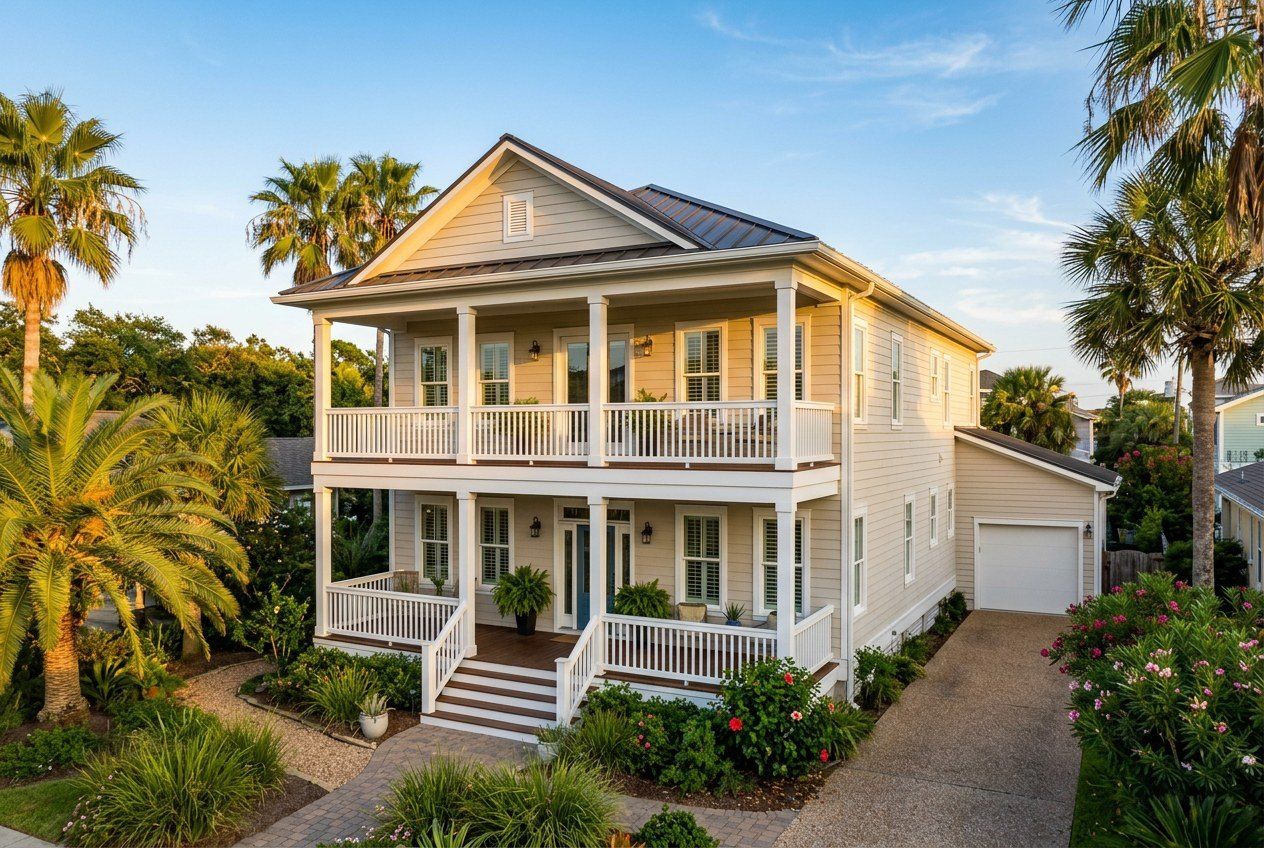
Exterior
The Best Time to Paint a House Exterior in Gulf Coast Texas
On the Gulf Coast the problem is rarely cold. It is heat, humidity, dew and sudden rain, and the label on the can sets the limits.
The short answer
For most of the Texas Gulf Coast, from Corpus Christi through Houston, Galveston and the Beaumont area, the most reliable windows are mid-spring (roughly March to May) and fall (roughly October to November). Temperatures are moderate, there are more dry days in a row, and dew dries off earlier. Summer is possible with care; winter usually works on mild, dry days. The peak of hurricane season, typically August through October, brings the most risk of multi-day rain.
What the paint label says
Every exterior paint has application limits on its label and technical data sheet. They vary by product, so read yours, but they typically cover:
- Minimum air and surface temperature. Many modern acrylic latex paints can be applied down to about 35°F, others need 50°F. On the coast this matters only on a few winter days.
- Maximum temperature. Many manufacturers advise against painting surfaces above about 90°F, because paint dries too fast to level and bond, leaving lap marks and poor adhesion.
- Dew point and humidity. The surface should be dry and warmer than the dew point, commonly at least 5°F above it, so moisture is not condensing on it.
- Rain-free time. Most latex paints need a few hours before light rain and longer before heavy rain. The label gives the figure.
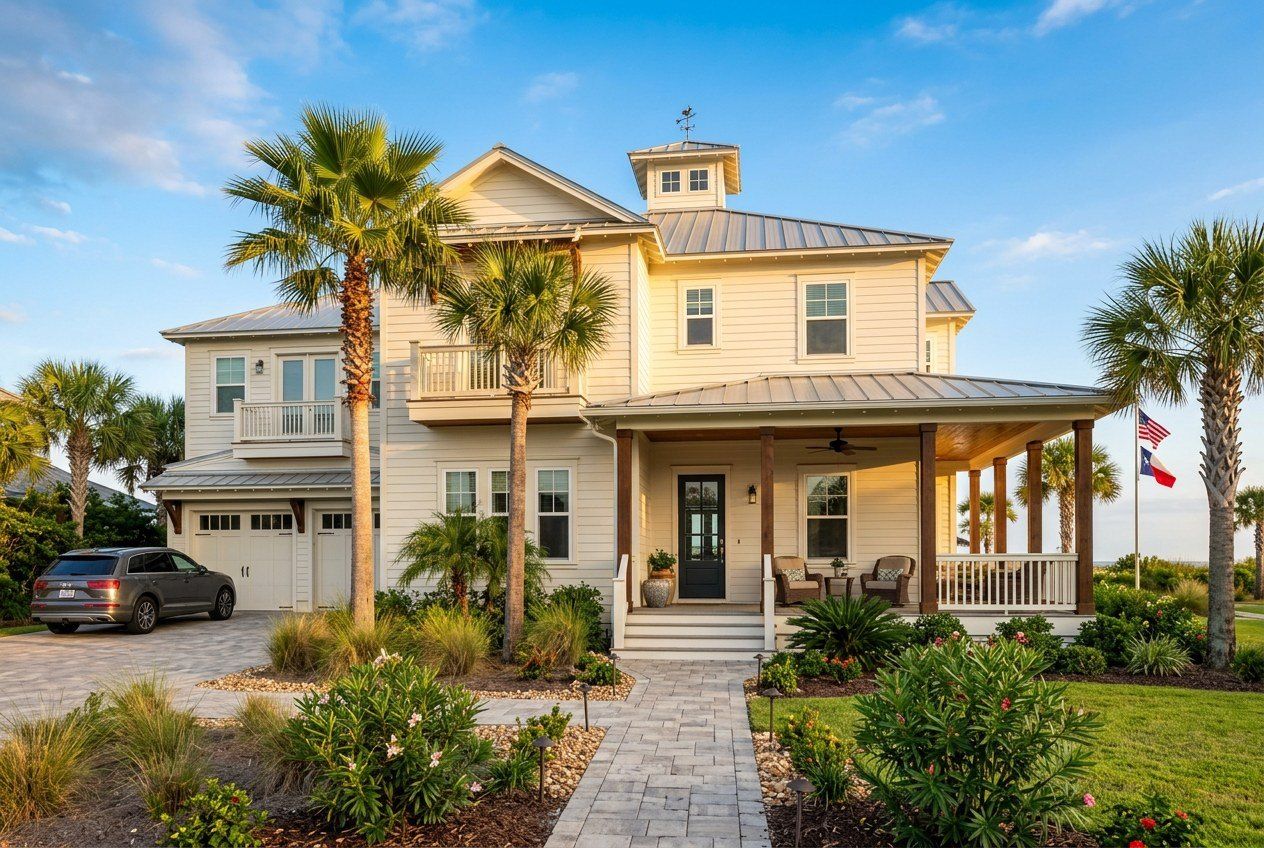
Heat: follow the shade
NOAA climate normals put average summer highs on the upper Texas coast in the low 90s, and siding in direct sun gets far hotter than the air. Dark siding in afternoon sun can exceed the label's maximum even on a moderate day. Plan the day around the sun:
- Start on the west side in the morning while it is shaded; move to the east side in the afternoon.
- Avoid painting a wall in full sun in summer; wait until it has been in shade for an hour.
- Stop early enough for the paint to set before evening dew.
Humidity and dew: the coastal problem
High humidity slows drying and can cause surfactant leaching, a sticky, brownish, soapy residue that forms when moisture draws ingredients to the surface of fresh latex paint. It usually washes off, but it is a sign the paint went on too late in the day or before a humid night. On the coast, dew can settle on siding in the late afternoon and stay until mid-morning. Practical rules:
- Begin after the dew has burned off and the surface is dry to the touch.
- Finish two to four hours before sunset, or earlier on very humid days.
- Check the hourly forecast for rain and the overnight dew point, not just the daily high.
Prep has its own timing
After pressure washing, give wood siding time to dry, often at least a day or two in good weather and longer in humid spells; a moisture meter takes out the guesswork. Caulk and primer have their own cure times before topcoating. Build these into the schedule, because rushing prep is the most common reason a coastal paint job fails early. If the house was built before 1978, test or presume lead before any scraping or sanding; see lead-safe painting rules.
Season by season
- Spring: the best window for most homes. Watch for storm fronts and pollen on fresh paint.
- Summer: workable with early starts and shade-chasing. Avoid dark colors in full sun.
- Fall: very good after the heat breaks and once the tropical weather risk drops.
- Winter: fine on mild, dry days if the product's minimum temperature is met and the surface stays above dew point overnight.
For prep, products and coastal conditions, see the exterior painting guide; for durability, see how long exterior paint lasts.
Booking a painter
Spring and fall are also when professional painters are busiest, so book early and agree in writing on how weather delays are handled.
A sample day
On a spring day on the coast: wait for the dew to dry, start on the side already in shade, move around the house ahead of the sun, and stop with enough time for the paint to set before evening.
Frequently asked questions
What month is best to paint a house exterior in Houston?
Mid-spring and fall are usually the most reliable, with moderate temperatures and more consecutive dry days. Summer can work with early starts and shade.
Is it too humid to paint outside?
It is if the surface is damp or close to the dew point, or if heavy dew or rain is likely before the paint sets. Check the label’s limits and the hourly forecast.
How hot is too hot to paint exterior?
Many manufacturers advise against painting surfaces above about 90°F. Siding in direct sun is much hotter than the air, so paint in the shade.
How long should paint dry before rain?
It depends on the product, temperature and humidity. Many latex paints need several hours before light rain; check the label.