
Hiring
How to Hire a Contractor Safely
Hiring well is mostly about paperwork and patience — a written scope, verified insurance, a sane payment schedule, and the discipline to walk away from pressure.
Start with a written scope you control
Before you talk to anyone, write down what you want done, as specifically as you can manage. This makes bids comparable, because everyone is pricing the same work — otherwise each bidder scopes the job differently and you compare numbers that measure different things.
A proper written scope covers: what work is included, what materials and products by name and grade, what surface preparation is included (on painting this is the clause that matters — "prep as needed" means nothing), what is explicitly excluded, who handles permits and cleanup, the schedule, and the payment terms.
If the estimate is one line and a number, you do not have a scope. You have a price for an unspecified amount of work, and the amount will be decided later by someone who is not you.
Insurance and liability
Two things to verify, and verify means seeing documentation, not being told.
- General liability insurance. This covers damage to your property. If someone puts a ladder through your window or a burst pipe floods a floor, this is what pays.
- Workers' compensation, where applicable. Texas is unusual in not requiring most private employers to carry it, which means a contractor on your property may legitimately not have it — and if someone is injured on your job, the exposure may find its way to you or your homeowner's policy. Ask directly.
Request a certificate of insurance issued directly from the insurer or agent, not a photocopy handed to you. Certificates can be stale or fabricated; one sent from the agent cannot.
Licensing varies by trade in Texas. Electricians and plumbers are state-licensed and verifiable. General remodeling contractors and painters are not licensed at the state level, which means anyone can print business cards. That is precisely why the rest of this page exists.
References, and how to actually use them
Everyone's references are good, because nobody hands out the number of an unhappy customer. The value is in the questions. Ask for references of similar age to your job — one finished two years ago tells you how it held up. Then ask what is hard to answer glowingly on autopilot: Did anything go wrong, and how was it handled? Did the final price match the estimate?
Why the cheapest bid is often the most expensive
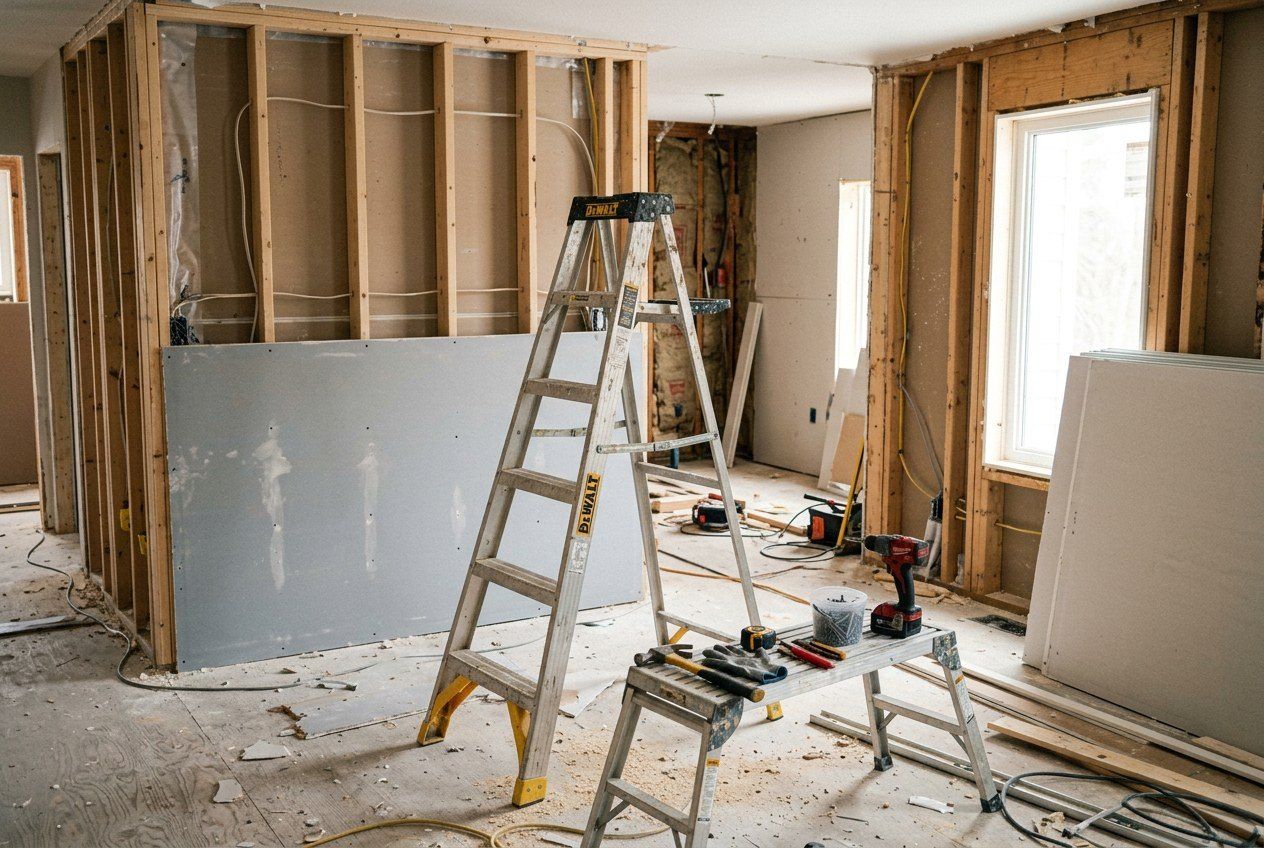
When one bid is dramatically below the others, it is almost never because that contractor found efficiencies the others missed. Usually it is less scope — most often less preparation, which is invisible in the finished product and is where the hours hide. A painting bid at half the others has almost certainly deleted the washing, scraping, sanding, and priming. Or it is:
- No insurance, a real cost the others are carrying and this one is not.
- A number designed to win, not to be true — followed by change orders once work has started and you have no leverage. If one bid is far below the others, the question is not "why are they cheap" but "what did they leave out" — ask, in writing.
Payment schedules
- Never pay in full up front. Not for a discount, not for any reason. Money paid is leverage lost.
- A modest deposit is normal — materials must be bought. One approaching half the job before anything happens is not.
- Tie payments to milestones, not dates. Payment on completion of rough-in or drywall — not payment on the 15th regardless of what has happened.
- Hold a final retainage until the punch list is done. That last slice is what gets the last of the work finished. Release it when the work is complete and inspected — and pay traceably throughout, by cheque or card, never cash.
Lien basics, in general terms
A mechanic's lien is a claim against your property for unpaid work or materials. The part that surprises homeowners: a subcontractor or supplier the general contractor never paid may be able to file against your property even though you paid the general contractor in full. You can, in effect, pay twice.
Texas lien law is genuinely complicated, and residential homestead property has its own rules and deadlines; a summary here would be misleading. In principle: lien rights can reach a homeowner who has paid, and lien waivers — signed releases confirming subs and suppliers have been paid — are the ordinary tool for managing this, collected as payments are made. On a substantial remodel, have an attorney review the contract.
Red flags
- Door-knocking after a storm. The Gulf Coast gets a wave of this after every significant weather event. Some are legitimate. Many are transient operations that take deposits and leave, and by the time it is clear, there is no one to find. A contractor you sought out is a fundamentally different proposition from one who appeared at your door.
- No written contract, or resistance to putting anything in writing.
- Cash only, a discount for cash, a request to pay an individual rather than a business, or a large up-front payment before any work or materials.
- Pressure and artificial deadlines — "this price is only good today", "I have material left over from another job".
- Suggesting you skip the permit, or asking you to pull it yourself — which shifts liability to you and can mean they cannot pull one.
Finally: trust the pattern, not the personality. Contractors who take deposits and vanish are, almost by definition, reassuring in person. The paperwork is what tells you the truth.
See remodeling basics for how scope and sequence should be defined, exterior painting and interior painting for what proper preparation actually involves — useful when reading a bid — and the main guide for general planning. This site is independent and is not a contractor.