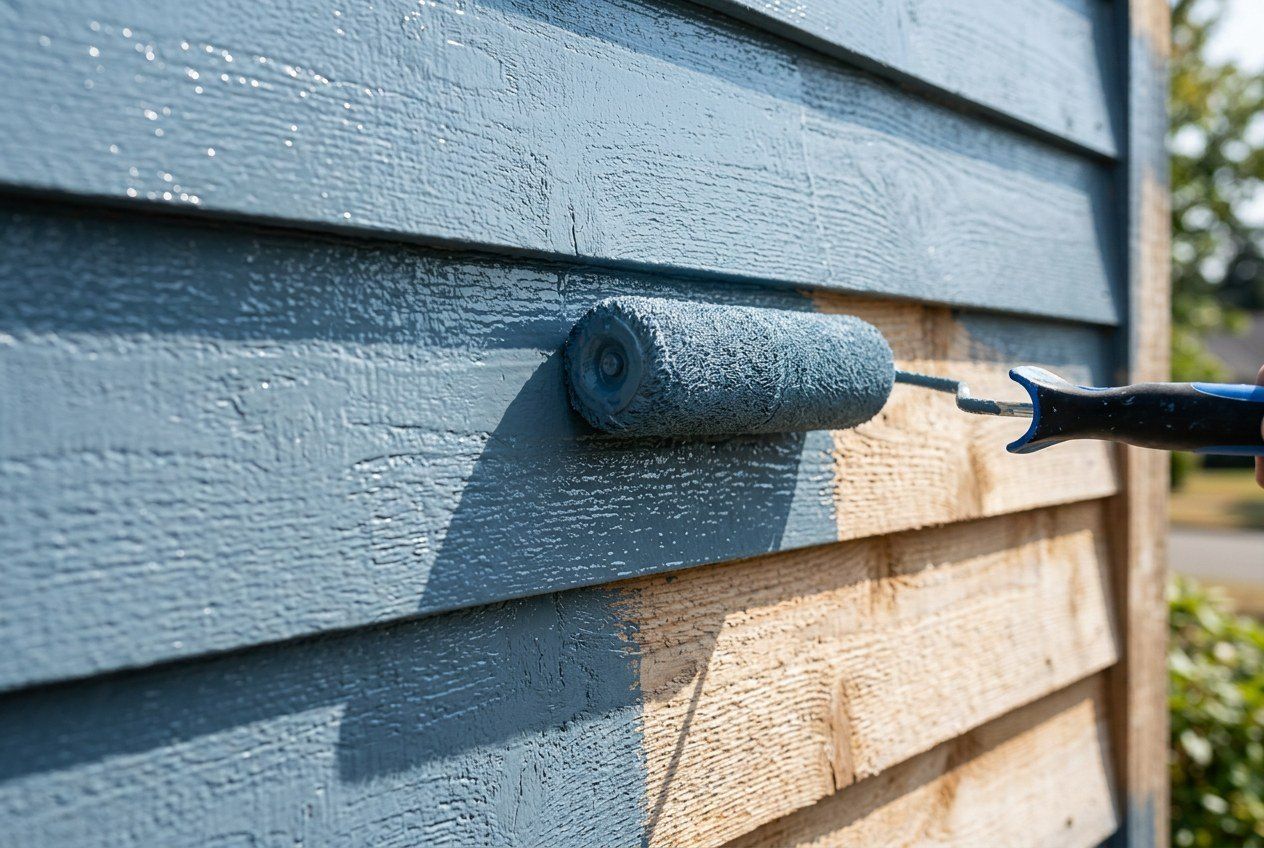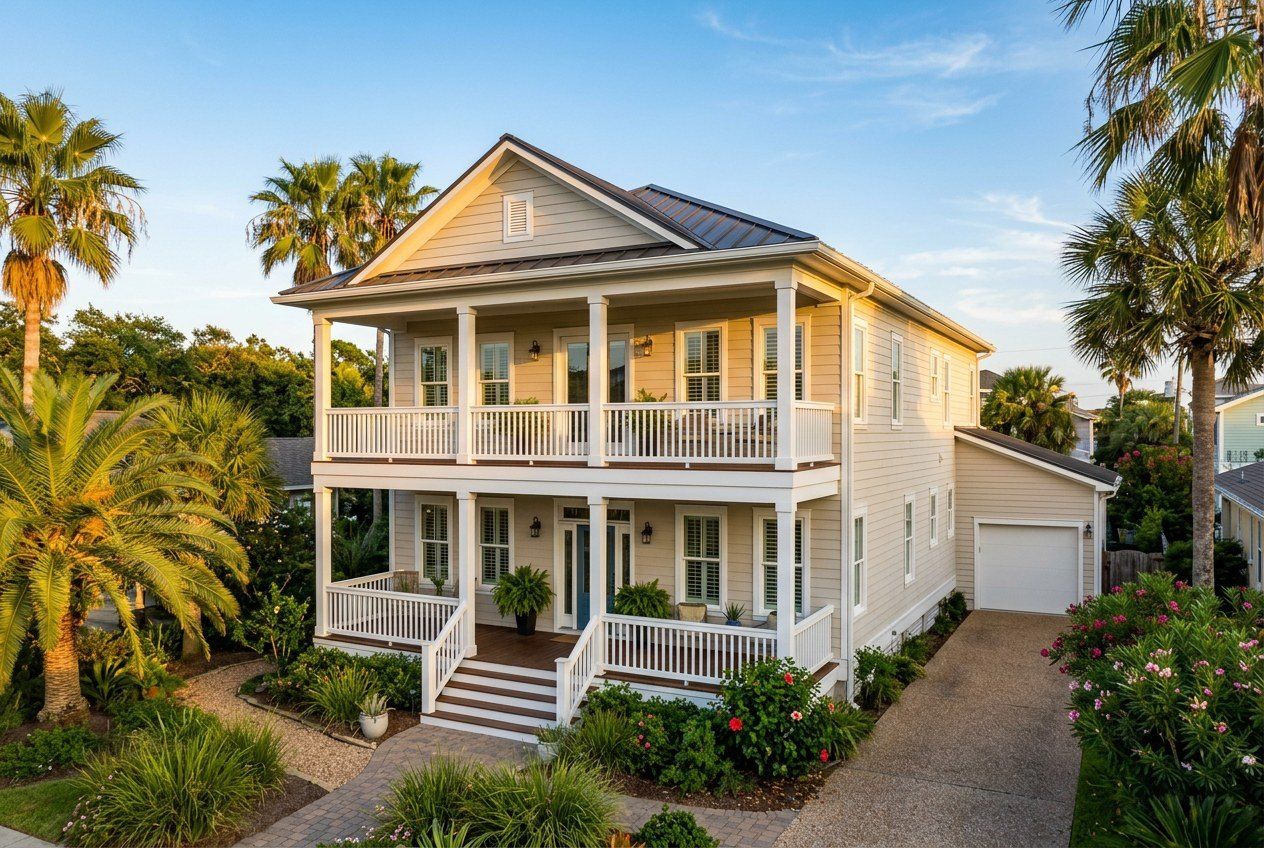
Exterior
Exterior Painting for the Gulf Coast
Sun, humidity, and salt air are hard on exterior paint. The right prep, product, and timing are what make a coastal paint job last instead of chalking and peeling early.
An exterior paint job is a home's first defense against the Gulf Coast climate, and that climate does not go easy on it. Intense ultraviolet light fades color and breaks down coatings, humidity feeds mildew and slows curing, and near the water, salt air adds its own corrosive edge. Painting a coastal exterior well is less about the color and more about building a coating system that can take the punishment.
Prep is even more critical outside
Exterior surfaces weather, so preparation carries more weight than it does indoors. A finish coat applied over chalky, dirty, or damp siding will not bond, and it will fail early no matter how good the paint is. General exterior prep includes:
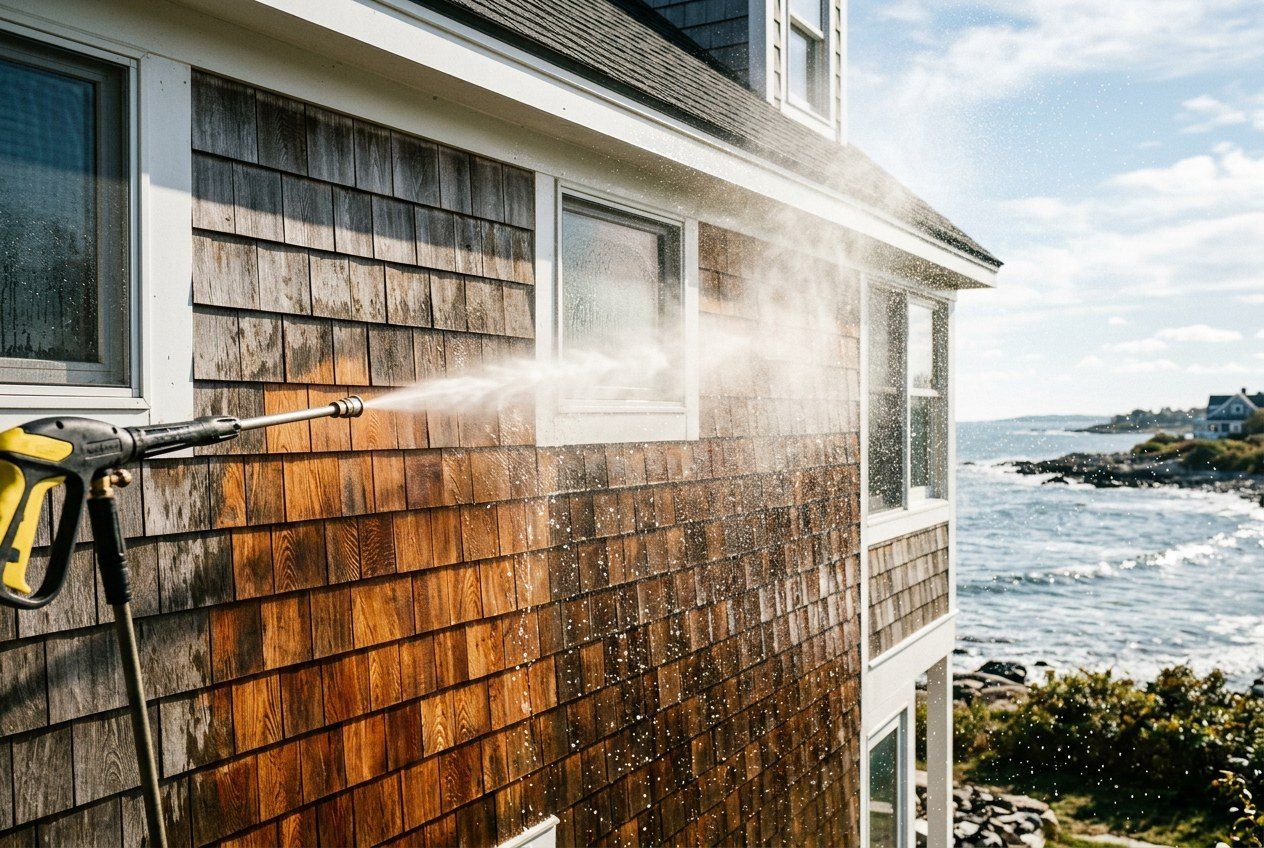
- Washing the surface to remove dirt, chalk, mildew, and salt film, then letting it dry completely.
- Scraping loose and peeling paint back to a sound, feathered edge.
- Treating and killing mildew rather than painting over it, since it will grow back through fresh paint.
- Sanding rough or glossy areas and spot-priming bare wood and repairs.
- Caulking gaps around trim, windows, and joints to keep wind-driven rain out.
On the coast, that mildew and salt-film removal step is not optional. Skipping it is the most common reason a fresh coat fails within a couple of seasons.
Choose coatings built for sun and moisture
This is where product quality shows its value. Look for exterior coatings formulated for UV resistance and color retention, with good mildew resistance and flexibility to handle the expansion and contraction that heat brings. High-quality acrylic latex exterior paints are a common choice because they breathe, flex, and resist fading better than cheaper alternatives. Pairing the topcoat with the right primer, a bonding or stain-blocking primer where needed, completes the system. Cutting corners on product here is a false economy, because repainting a whole exterior years early costs far more than the paint saved.
Mind the material
Coastal homes use a range of exterior materials, and each behaves differently. Fiber-cement siding is popular here for its resistance to moisture and rot, and it holds paint well when properly prepared and primed. Wood needs more attention to sealing and moisture. Stucco and masonry call for breathable, masonry-appropriate coatings. Matching the coating to the substrate is part of building a system that lasts.
Paint in the right window
Weather timing is decisive on the Gulf Coast. Ideal conditions are moderate temperature, moderate humidity, and dry surfaces, which can be a narrow window here. A few practical rules:
- Avoid painting in the heat of the day on sun-baked walls, where paint can dry too fast and blister; follow the shade around the house.
- Do not paint when rain is imminent or when surfaces are still damp from overnight humidity or dew.
- Respect high heat and high humidity limits on the product, which affect curing.
- Plan around the storm season, when moisture and wind make good results hard to achieve.
On the coast, you are not just applying a color. You are building a weather barrier, and it is only as good as the surface underneath and the day you apply it.
Protect the details
Trim, fascia, soffits, and doors take extra abuse and often benefit from tougher, more moisture-resistant finishes. Keeping caulk lines sound and gutters working keeps water off the walls, which extends the life of everything you just painted. Exterior painting shares its prep-first philosophy with interior painting, connects to larger remodeling projects when siding or trim is being replaced, and depends on how a color reads in strong coastal sun, which is exactly what choosing colors addresses. Get the system right, and a Gulf Coast exterior can look sharp for years despite everything the climate throws at it.
Maintenance extends the life of the job
An exterior finish lasts far longer when it is maintained rather than left alone until it fails. A gentle wash once or twice a year removes the mildew, salt film, and grime that break coatings down, and it lets you spot small problems, a hairline crack in caulk, a bare spot, a lifting edge, while they are still easy to fix. Touching up those small failures promptly stops moisture from getting behind the paint and spreading the damage. Coastal homes reward this kind of attention, because the climate is relentless and a coating that is checked and cleaned regularly will outlast one that is simply forgotten until it is peeling.
When to repaint
Knowing when an exterior needs repainting saves both money and trouble. Chalking that rubs off on your hand, fading, hairline cracking, and any peeling or blistering are signs the coating is reaching the end of its service life. Catching this before bare substrate is exposed to the weather is ideal, because once wood or siding is left unprotected, moisture damage can follow quickly and turn a repaint into a repair. On the Gulf Coast, where UV and humidity accelerate wear, inspecting the exterior periodically and planning a repaint before the coating fails outright is the approach that protects the home underneath, not just its appearance.