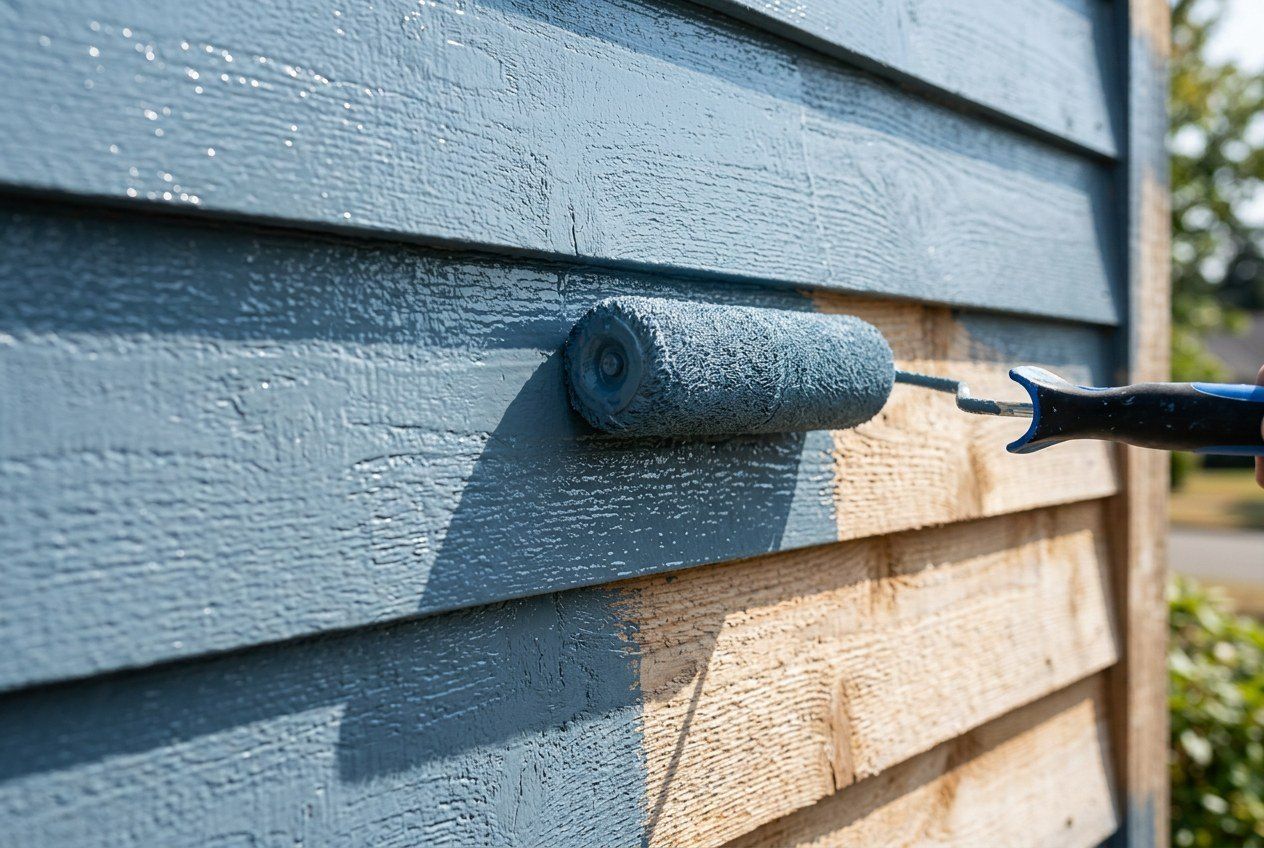
Exterior
How Long Does Exterior Paint Last?
There is no single number. Surface, prep, product, color and exposure decide whether a paint job looks good for five years or more than ten.
What decides the lifespan
- Preparation. Paint fails at the bond first. Dirt, chalk, mildew, loose old paint and damp wood all shorten its life, regardless of product.
- Surface. Wood moves with moisture and is the hardest surface to keep painted. Fiber cement and stucco are more stable and usually hold paint longer. Factory-applied finishes on fiber cement usually carry their own limited finish warranties from the manufacturer; read what they exclude.
- Product and film thickness. Better 100% acrylic exterior paints, applied at the coverage rate on the label, outlast thin coats of cheaper paint. Two coats almost always beat one.
- Exposure. South- and west-facing walls take the most sun and fade and chalk first. Walls under deep eaves can last years longer.
- Color. Dark and saturated colors absorb more heat and fade faster; they also make wood move more.
- Coastal conditions. UV, humidity, mildew and, near the water, salt spray all speed up wear.
Rough expectations
Painting manufacturers and industry guides commonly cite ranges of about 5 to 10 years for a quality repaint on wood siding, and longer for stable surfaces such as fiber cement and stucco. On the Gulf Coast, expect the shorter end on sun-facing walls and the longer end on shaded ones. Trim, decks and horizontal surfaces wear faster than vertical siding. Treat a paint warranty as a statement about the product, not a prediction for your house; most exclude poor prep and normal weathering.
Signs it is time to repaint
- Chalking: rub a dark cloth on the wall. A heavy white or colored powder means the binder is breaking down.
- Fading that is uneven between sunny and shaded walls.
- Cracking and flaking, especially on trim and window sills.
- Peeling to bare wood, often a sign of moisture behind the paint; find the source before repainting.
- Mildew that returns quickly after cleaning.
- Exposed or soft wood, which needs repair first; see wood rot repair.
Repainting when the film starts to chalk and thin is cheaper than waiting for peeling, because it needs far less scraping and repair.
How to get more years
- Wash the house every year or two with a gentle cleaner and low-pressure rinse to remove dirt and mildew.
- Keep water off the walls. Clean gutters, extend downspouts, and trim shrubs and trees so siding can dry.
- Re-caulk joints around windows, doors and trim as caulk fails.
- Touch up early. Spot-prime and paint chips on trim before water gets behind them.
- Repaint sun-facing walls first if the budget is tight; they wear fastest.
- Paint in the right conditions. Many early failures trace back to painting in heat, at dusk or before rain; see the best time to paint a house exterior.
On houses built before 1978, scraping and sanding old paint can release lead dust; read what the RRP rule requires before prep. For the full exterior process, see exterior painting.
Surface by surface on the Gulf Coast
- Wood lap siding and trim: the most maintenance. Sun-facing walls and window sills usually need attention first. Prime bare wood promptly and keep caulked joints sound.
- Fiber cement: holds paint well because it does not swell and shrink like wood. Repaint when the finish chalks or fades; the board itself rarely causes paint failure.
- Stucco: use products made for masonry that let the wall breathe. Cracks should be repaired before painting, or water gets in behind the film.
- Brick: painted brick needs breathable masonry coatings; unpainted brick generally should stay unpainted unless there is a good reason.
- Metal railings and doors: rust spreads under paint; remove rust and use a rust-inhibiting primer, especially near salt air.
Plan the next repaint
Keep a simple record of when each side of the house was painted, the product, color and sheen, and the condition each spring. It makes repainting decisions easier and helps a painter quote accurately. Many homeowners find that repainting the sun-facing walls and trim on a shorter cycle, and the shaded walls less often, keeps the whole house looking fresh for less than repainting everything at once.
Frequently asked questions
How often should you paint the exterior of a house in Texas?
Many homes need repainting every 5 to 10 years, with sun-facing walls and trim sooner on the Gulf Coast. Inspect yearly for chalking, cracking and peeling.
Does exterior paint last longer on fiber cement than on wood?
Usually yes. Fiber cement is more dimensionally stable than wood, so paint films crack and peel less.
Why is my exterior paint peeling after a few years?
The most common causes are moisture behind the paint, poor prep or painting in the wrong conditions. Find and fix the moisture source before repainting.
Does a lifetime paint warranty mean it lasts forever?
No. Paint warranties cover product defects under conditions set by the manufacturer and usually exclude normal weathering and poor surface preparation.